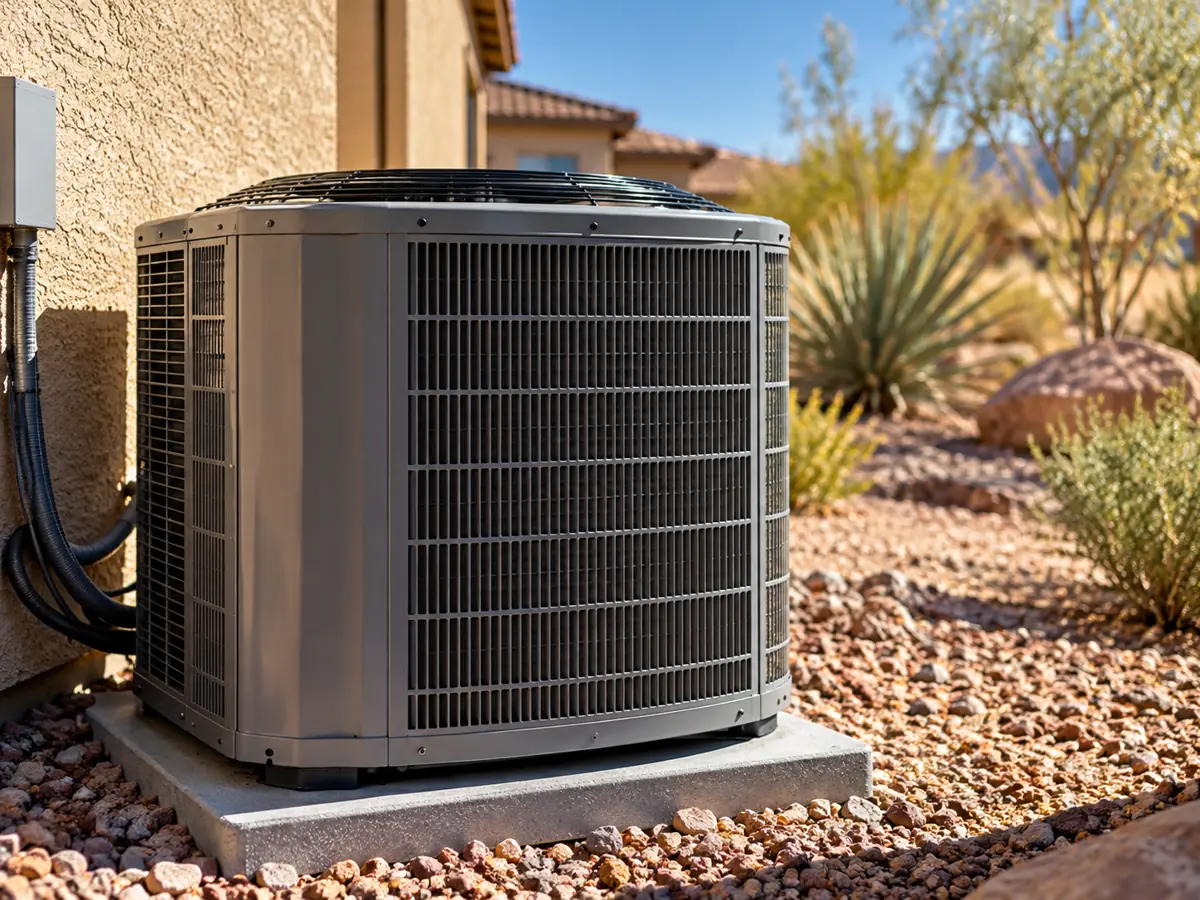
What to check before the cooling season, during it and after it is covered by this summer HVAC checklist for Las Vegas, NV homeowners. Most breakdowns can be prevented with a little attention to filters, drains, the outdoor unit and the thermostat. If you find something you cannot fix yourself, use Call Now and an independent HVAC contractor serving 77 ZIP codes around Las Vegas will answer.
Before the heat starts
- Replace the filter and write the date on it
- Clear plants, leaves and debris from around the outdoor unit
- Check the thermostat settings, batteries and schedule
- Pour water into the condensate drain pan area only if the manufacturer or technician recommends it, and check the drain line outlet
- Open and clean supply and return registers
- Book a tune-up so the coil, capacitor and refrigerant are checked
During the cooling season
- Check the filter every month in heavy use
- Set the thermostat higher when you are away and avoid large swings
- Use ceiling fans and close blinds on sun-facing windows
- Listen for new noises and watch for water near the air handler
- Keep the outdoor unit clear and shaded from debris, not blocked
Early warning signs
- Longer run times with the same settings
- Water around the air handler
- Humid or sticky rooms
- Warm spots in some rooms
- A hum, click or buzz from the outdoor unit
After the season
- Replace the filter before the heating season
- Schedule heating service if you have a heat pump or furnace
- Cover or protect the outdoor unit only as the manufacturer allows
- Review utility bills for changes
Myths and facts
- Myth: refrigerant is used up. Fact: low refrigerant means a leak.
- Myth: maintenance is optional. Fact: dirty coils and weak capacitors cause many summer failures.
- Myth: set the thermostat very low to cool faster. Fact: the AC cools at a steady rate and just runs longer.
- Myth: a bigger AC is always better. Fact: oversizing causes short cycling and humidity problems.
- Myth: closing vents saves energy. Fact: it raises duct pressure and can cause leaks and noise.
HVAC terms explained
- Condenser coil: the outdoor coil where heat is released
- Evaporator coil: the indoor coil where refrigerant absorbs heat from the air
- Condensate drain: the line that carries moisture out of the house
- Superheat and subcooling: readings that show whether the refrigerant charge is correct
- Contactor: the switch that sends power to the outdoor unit
- Static pressure: a measure of airflow resistance in the ducts
- EPA Section 608: the certification required to handle refrigerants
A checklist for this week
- Inspect the drain line outlet and the area around the air handler for water
- Test the thermostat and schedule
- Write down any noises or smells
- Clear the outdoor unit of debris
- Book a tune-up if it has been more than a year
- Check supply and return registers
- Replace the filter and note the date
Ducts, airflow and comfort
Even a sound system leaves hot rooms when ducts leak, returns are undersized or registers are blocked, because comfort depends on airflow as much as capacity. These problems show up when a technician measures static pressure and airflow instead of only refrigerant pressures.
What shapes the written scope
Do not judge an AC job by how the call sounds, since two similar complaints can lead to very different work. Look for a written scope that states the technician's findings and the factors that applied.
Ask the provider to separate the diagnostic from the repair, and to list any parts, labor or follow-up that are not included.
- The age, tonnage and refrigerant type of the system
- Whether the ductwork, return air or thermostat contributes to the problem
- Warranty status of the parts and whether the equipment is registered with the manufacturer
- Whether the fault is an electrical part, an airflow problem, a refrigerant leak or a drainage problem
- Access to the air handler in the attic or closet and to the outdoor unit
Safety and rules to know
High-voltage electricity, pressurized refrigerant and moving parts all come together in an air conditioner. Leave electrical panels closed, never bridge contactors, and do not add refrigerant yourself. A capacitor may still hold a charge once the power is off.
Certification under EPA Section 608 is required in the United States for anyone buying or handling refrigerant, which must be recovered instead of vented. Request the technician's certification and confirm the contractor's licence through Nevada State Contractors Board (C-21 Refrigeration and Air Conditioning).
Questions to ask before approving a repair
- How old is the system and which refrigerant does it use?
- Will you give me the findings and the scope in writing before work starts?
- What does the repair warranty cover and for how long?
- What are my options: repair now, repair and monitor, or replace?
- What failed, how did you confirm it and can you show me the part or the reading?
Prepare your Las Vegas home before the technician arrives
- Check that the outdoor disconnect and the breaker are on, but do not open electrical panels
- Replace or check the filter, and clear furniture from the return grille and the air handler
- Set the thermostat to cool and note what it shows and what the house temperature is
- Write down the sounds, smells, leaks or ice you have noticed, and when
- Clear weeds, leaves and debris from around the outdoor unit
When to call a professional
Pick up the phone if the system will not start, if ice or water shows up, if the same problem comes back after your own checks, if you hear grinding or banging, or if anyone at home is vulnerable to heat or cold. Call Now at the top of the page puts you through once you describe what the system is doing: an independent HVAC contractor covering your ZIP code confirms the address and diagnoses the system in person.
What this means for a home in Las Vegas
Extreme desert heat with summer highs above 105 degrees and long cooling seasons; attics are far hotter than the air outside. Monsoon moisture in July to September adds humidity spikes.
Nevada contractors are licensed by the Nevada State Contractors Board; refrigeration and air conditioning is the C-21 classification. Dust and sun exposure clog and age condenser coils; many systems last about 10 to 15 years in extreme heat. Use these local details when you compare advice, and ask any technician how they apply to your system and your house.
Getting help in Las Vegas and nearby cities
Through Air Conditioning Installation Las Vegas, you can reach independent HVAC contractors serving 77 ZIP codes in Las Vegas, Nevada: 89101, 89102, 89103, 89104, 89105, 89106, 89107, 89108, 89109, 89110. Requests also go to providers in North Las Vegas, Henderson and Boulder City, and coverage is checked for each address individually.
Start with Call Now at the top of the page and say what you have found. The contractor checks your address, looks over the system and gives you the scope in writing.
Keep reading
Related pages for Las Vegas homeowners: Commercial HVAC; AC Making Noise: What Each Sound Means; Frozen AC Coil: Why It Happens and What to Do; SEER2 Explained for Las Vegas Homeowners. For the area list, see the service areas page.
Common questions about summer HVAC checklist for las vegas
When should I schedule an AC tune-up?
In spring, before the first hot spell.
How often should I change the filter?
Anywhere from one to three months apart, depending on filter type, pets and dust.
Should I cover my AC in winter?
A cover is generally not required according to most manufacturers, and it can trap moisture.
What temperature should I set in summer?
Around 75 to 78 degrees is a common setting for households at home, with a higher setting when no one is in.
Does cleaning the outdoor unit help?
It helps; remove debris from around the unit and rinse the coil gently while the power is off.
What if the AC fails in a heat wave?
Go to the coolest room, look in on vulnerable people and use Call Now.